
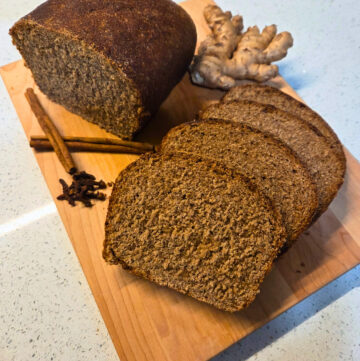
This sourdough autumn spice bread is full of the autumn spices: cinnamon, cloves, ginger, and nutmeg. I enjoy baking it every year to usher in the new season with delicious bread and a great smell.
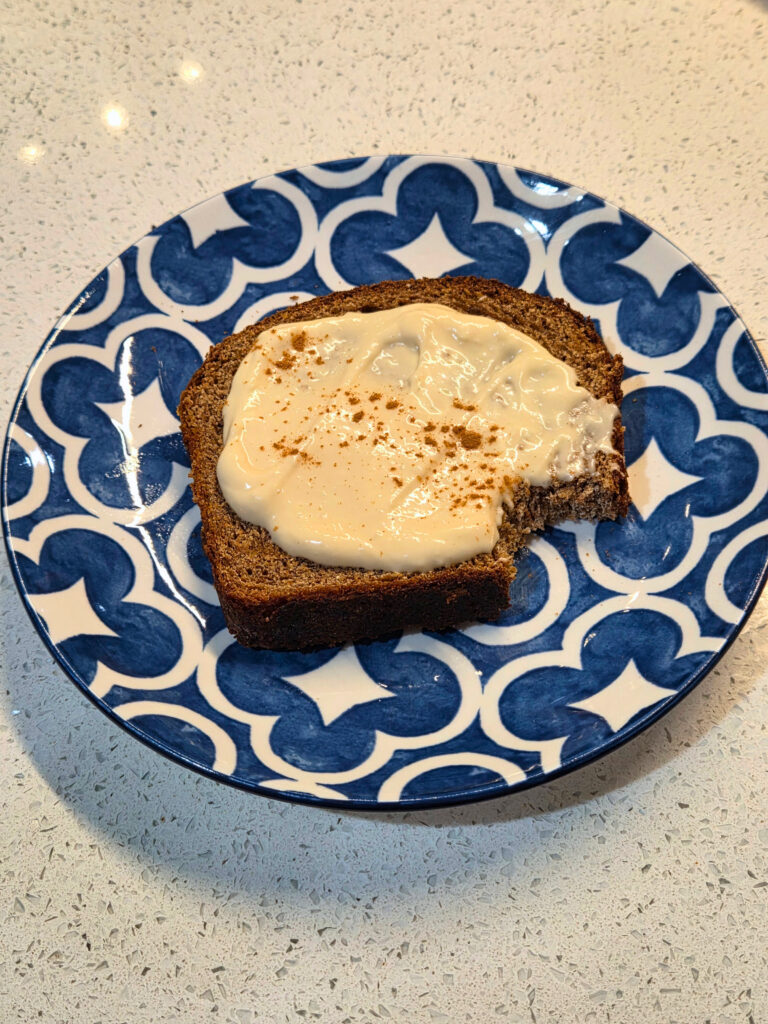
This bread is easily frozen and enjoyed throughout the fall and winter months or turned into French toast or French toast casserole. My favorite way to eat it is with some sweet cream cheese on top!
- Why You Will Love this Sourdough Autumn Spice Bread
- Ingredients and Substitutions for Sourdough Autumn Spice Bread
- How to Stretch and Fold
- Sample Baking Schedule for Sourdough Autumn Spice Bread
- How to Store Leftovers
- Sourdough Autumn Spice Bread Made with Fresh Milled Flour
- What are your Favorite Autumn Toppings?
- Other Articles You May Enjoy
- Pin For Later
Why You Will Love this Sourdough Autumn Spice Bread
You will love this bread because it is the perfect way to prepare for the fall season. It makes your home smell wonderful during baking. Once baked, it is a wonderful treat for breakfast, dessert, or a snack!
I serve this bread to my family whenever they ask for it because I know that it has health benefits from the fermented sourdough and because it is made with freshly milled flour.
My favorite ways to eat this bread are toasted with some sweetened cream cheese on top and as pumpkin French toast.
You can enjoy this bread with pumpkin butter, apple butter, butter, jelly, and dipped in coffee or hot cocoa.
Sourdough autumn spice bread freezes well and if you slice before freezing is a great fast breakfast option! We like to pop it in the toaster or oven and then add the cream cheese. Anything that makes breakfast less stressful is great in my book!

Ingredients and Substitutions for Sourdough Autumn Spice Bread
Dry Ingredients
Fresh Milled Flour – I use a Komo Mill to grind the wheat berries into flour. I love half hard red and half spelt for this loaf, but have been experimenting with khorasan instead of spelt, lately. You could use hard white instead of hard red if you want to have a loaf that tastes more like a store bought loaf.
Salt – Any salt you have will work, but remember that some whole salts like Redmond’s Real Salt and Celtic Salt can leave a gritty texture in your bread because of the extra minerals they have.
Cinnamon – I use cassia cinnamon, but ceylon cinnamon would work fine too. If you want to leave out or add more cinnamon you are welcome to!
Nutmeg – I love adding nutmeg to recipes that ask for cinnamon. I think the flavors go well together. Feel free to leave the nutmeg out if you like.
Ginger – Adding ginger to recipes really make it feel like fall in my home. The whole house smells divine while the bread is baking. Feel free to leave the ginger out if you like.
Cloves – Clove is a very strong flavor so I only added a 1/2 teaspoon to this loaf. I do really like the fall flavor it brings to the loaf though. Feel free to leave the cloves out if you like.
Wet Ingredients
Milk – You can use any milk or milk alternative you like. If you want to use water instead you can do that too.
Honey – I use local honey in my loaf. You can use any honey you like for this bread.
If you want to use maple syrup, I would replace 100 grams of milk with 100 grams of maple syrup added to the dough. You will probably need to adjust the flour and milk to make sure the dough is the right texture.
Sourdough Starter – I prefer a sourdough starter with a dough like consistency. If you have a runny sourdough starter you may need more flour to balance it out.

How to Stretch and Fold
If ‘stretch and fold’ is a new term for you, I want to assure you that stretch and folds are easy and can change your baking life!
Stretch and folds are a great alternative to kneading bread dough. I preform about 3-6 sets of stretch and folds for each dough I make. By the end of the stretch and folds, my dough is holding together, feels smooth, and breaks only after stretching thin.

To do a stretch and fold means to take a side of the dough and stretch it as high as your bread will allow. Then fold that piece over the rest of the ball of dough. This is easiest if your hand is wet.
Rotate the bowl 90 degrees and do another stretch up as high as the bread will allow. Then fold that piece over the ball of dough and rotate another 90 degrees.
Stretch and fold side 3 and side 4, then place the dough fold side down so that it looks nice.
This whole series of movements is only ONE set of stretch and folds. By the end of one set of stretch and folds your bread doesn’t really want to stretch anymore and the gluten needs time to relax.
After waiting at least 15-30 minutes do another set of stretch and folds. I do about 3-6 sets of stretch and folds for each bread I create.
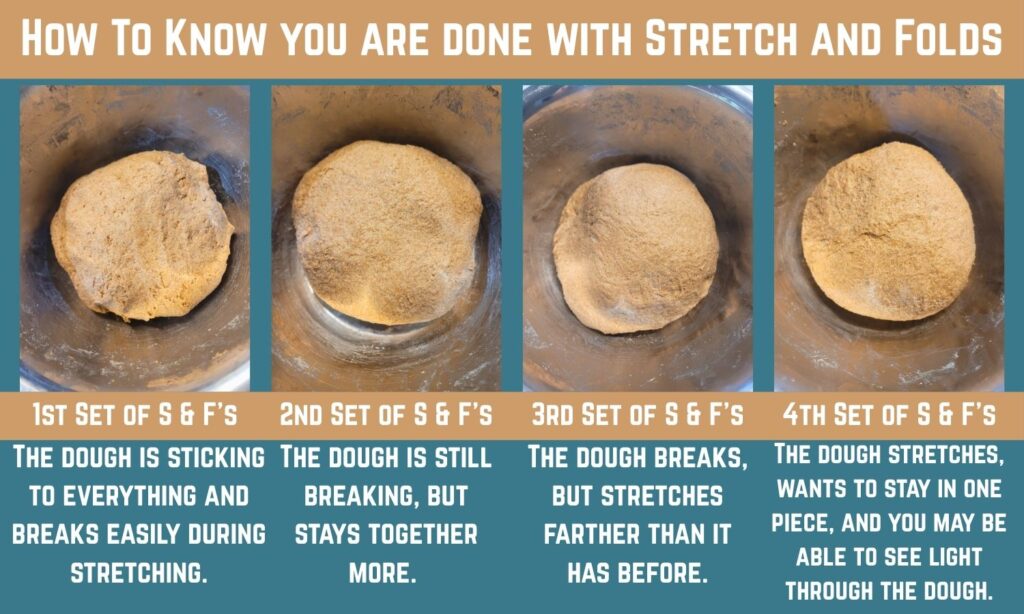
How do I know I am Done with Stretch and Folds?
You will know that you are done with the stretch and folds when your dough feels like it is smooth, which means that it doesn’t break apart until it is stretched far or thin.
The dough will stick to you a little bit, but almost all of it will stay with the ball of dough. Your hands should get easier and easier to clean as you finish your sets of stretch and folds.
The more sets of stretch and folds you complete, the more gluten you are developing and that will help your dough rise and bake beautifully!
Sample Baking Schedule for Sourdough Autumn Spice Bread
Baking schedules can be challenging to create, but here is a sample one you can use if you want to bake this loaf for dinner.

How to Store Leftovers
If you have leftovers, store them in an air tight container. The air tight container will help your bread stay fresh longer.
After 2 days out on the counter, then I would store the loaf in the fridge to help it last longer.
You can also slice the bread and freeze the slices for future rushed mornings. Pop the frozen slice in a toaster and it will be ready to eat in minutes!
Sourdough Autumn Spice Bread Made with Fresh Milled Flour
Equipment
- 2 Bowls
- 1 Flour Mill
- 1 Set of Measuring Spoons
- 1 Kitchen Scale in Grams
Ingredients
- 500 Grams Hard Flour Hard Red or Hard White
- 9 Grams Salt
- 1 Tablespoon Cinnamon Ground
- 2 teaspoons Ginger Ground
- ½ teaspoon Cloves Ground
- 1 teaspoon Nutmeg Ground
- 150 Grams Honey
- 300-350 Grams Milk
- 200 Grams Sourdough Starter
Instructions
Mixing the Dough Instructions
- Mix the flour, salt, cinnamon, ginger, cloves, and nutmeg together in a bowl. Then make a well or hole in the middle of the flour that the wet ingredients will be poured into.
- Add the milk to the well in your flour first; then add the honey and starter.
- Mix until combined and no dry pockets of flour remain. Let sit for 15 minutes.
Stretch and Fold Instructions
- You can choose to knead your dough for 5-10 minutes right now. I prefer to preform sets of stretch and folds with a wet hand.
- Stretch and folds are where you take a piece of the dough in our hand and stretch it up and then fold it over the top of the dough. Turn the dough 90 degrees and then stretch the dough up and fold it over the top again. Turn 90 degrees again and stretch and fold again. Do it once more to the final side of the bowl.
- Let the dough rest for 15-20 minutes. Then preform another set of stretch and folds with a wet hand.
- Let the dough rest for 15-20 minutes. Then preform another set of stretch and folds with a damp hand.
- You may do another set of stretch and folds if you feel like your bread dough is still not ready. You are looking for the dough to be smooth like it wants to stick to itself more than it sticks to you.
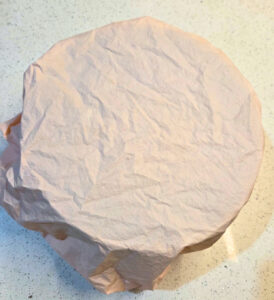
- Once you are happy with how the dough looks and feels cover the bowl with a damp towel, shower cap, or plastic wrap.
Bulk Ferment
- Set your dough into a warm space for 8-10 hours.
- Check the bread after 7 hours in the warm environment. Has it grown in size? If you shake the bowl gently does it wiggle at all? Yes to both means it is time to shape.

- If the answer is no to either, then let the dough sit for another 30 minutes to an hour and check again.
Shaping Instructions
- Before you start shaping, butter a 9×5 loaf pan.
- Once your bread has bulk fermented turn it upside down onto your work space. I don't flour it, but you can if you feel you need to.
- Press and stretch your dough into a rectangle shape that is about 8 in wide and 12 inches long or 20.5 cm by 30.5 cm.

- Take 1-2 inches of the short edge and fold it on top of the rest of the rectangle. Then use that larger edge to pull gently away from the bread and roll the next section up. Continue pulling and rolling until it is log. If your dough is sticking to your work surface use a bench scraper to help you lift it without stretching it too far.

- Tuck the short ends under the loaf so the ends add tension to the top of the loaf.
Rise and Baking Instructions
- Place the loaf into a buttered 9×5 in pan. Let it rise about 2-3 hours. Test if it is ready to bake by gently shaking the pan to see if the loaf jiggles too. That means there is air in it!
- Bake at 375℉ for 45-60 minutes. It is done when you stick a thermometer in the middle of the loaf and it measures 195-205℉.
- Let cool for about 15 minutes then take out of the pan onto a wire rack. Cool, slice, and enjoy!
What are your Favorite Autumn Toppings?
Let us know in the comments below what your favorite fall topping is!
Other Articles You May Enjoy
Delicious Fresh Milled Sourdough Cinnamon Raisin Swirl Bread
The Simple Way to Care for a Sourdough Starter
Fresh Milled Flour Basics You Need to Know
Pin For Later

Leave a Reply