
Learning to care for cast iron pans can feel overwhelming, but it doesn’t have to be. I want to help answer all the questions you have about how to care for cast iron pans!

- What is Normal Cast Iron Maintenance?
- Do I Wash Cast Iron after Every Use?
- Can I Use Soap with Cast Iron?
- How do I Stop my Cast Iron from Rusting?
- Can I Restore a Rusty Cast Iron Pan?
- What Oil is Best for Seasoning Cast Iron?
- Why is my Cast Iron Sticky?
- How do I Remove the Seasoning on my Cast Iron Pan?
- Can I Re-Season a Cast Iron Pan
- Is there Easy to Clean Cast Iron?
- Is Cooking on Cast Iron Healthy?
- What is Enameled Cast Iron?
- What is Cast Iron Made Of?
- Cast Iron vs Enameled Cast Iron
- Should I buy the Expensive Cast Iron?
- Can I Use Cast Iron on a Glass Stove Top?
- Can I Use Cast Iron over a Campfire?
- Can I Use Metal Utensils on Cast Iron Pans?
- Can I Use Plastic Utensils on Cast Iron Pans?
- Can I Recycle Cast Iron?
- When do I Need to Stop Using my Cast Iron Pan?
- Can I Fix my Uneven Cast Iron pan?
- Can I Fix my Warped Cast Iron Pan?
- What are Your Tips and Tricks to Care for Cast Iron Pans?
- Other Articles You May Enjoy
- Pin For Later
What is Normal Cast Iron Maintenance?
Normal care for cast iron pans are: regular seasonings, washing the pan after each use, drying the pan after each use, and coating the pan with a thin layer of oil after each use.
Cast iron maintenance is very similar to regular pan maintenance, except that you need to season and oil it often.
Regular Seasonings – Seasoning your pan regularly helps maintain the oil based coat that makes your pan non stick. If you are not seasoning your pan about every month or two with regular use, your pan may rust. If you are unsure how to season your cast iron pan read this article for a step by step guide.
Wash the Pan – Wash the pan after each use. Use water and just a small amount of soap to clean the pan from the previous use.
Dry the Pan – Drying the pan after every use is very important. If you leave water on the cast iron surface, there is a good chance it will rust. You can dry it with a towel or by heating it on the stove.
Coat with Oil Between Uses – After you dry the pan, then rub it down with a little oil to protect it while it is stored for its next use. This helps protect the pan from the water and air, which means it is less likely to rust.
Do I Wash Cast Iron after Every Use?
Yes, wash your pan out after every use.
I tried not washing my pan and just wiping it out after use, but what I discovered was that we could taste the flavors of the previous food!
Now, I wash my pans out after every meal with just a little soap to get the flavor out of the pan.
Can I Use Soap with Cast Iron?
Yes, you can use soap.
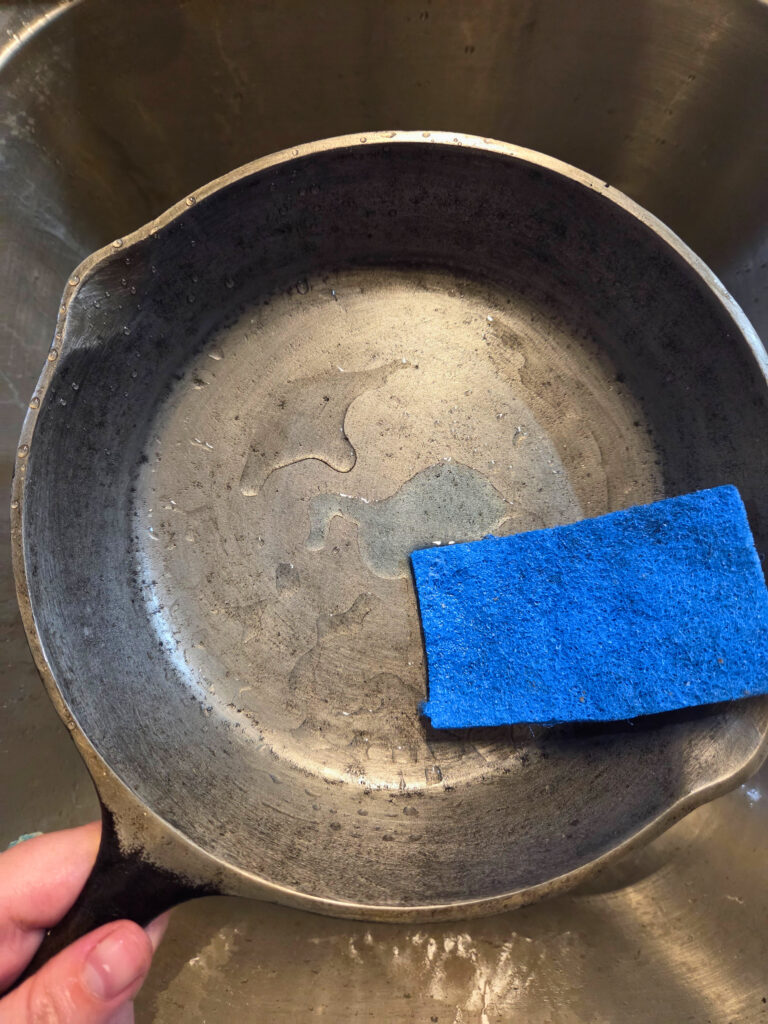
Soap is a degreaser, so it will try to take off your seasoning. I use soap when I wash my cast iron to get the flavors out of the pan.
I protect my seasoning by reapplying a seasoning to my cast iron once every month or two and using a towel to wash. If you use an abrasive scrubber (like steel wool), it will remove the seasoning.
After each wash, I dry the pan, then coat it in oil again to prepare for the next use.
How do I Stop my Cast Iron from Rusting?
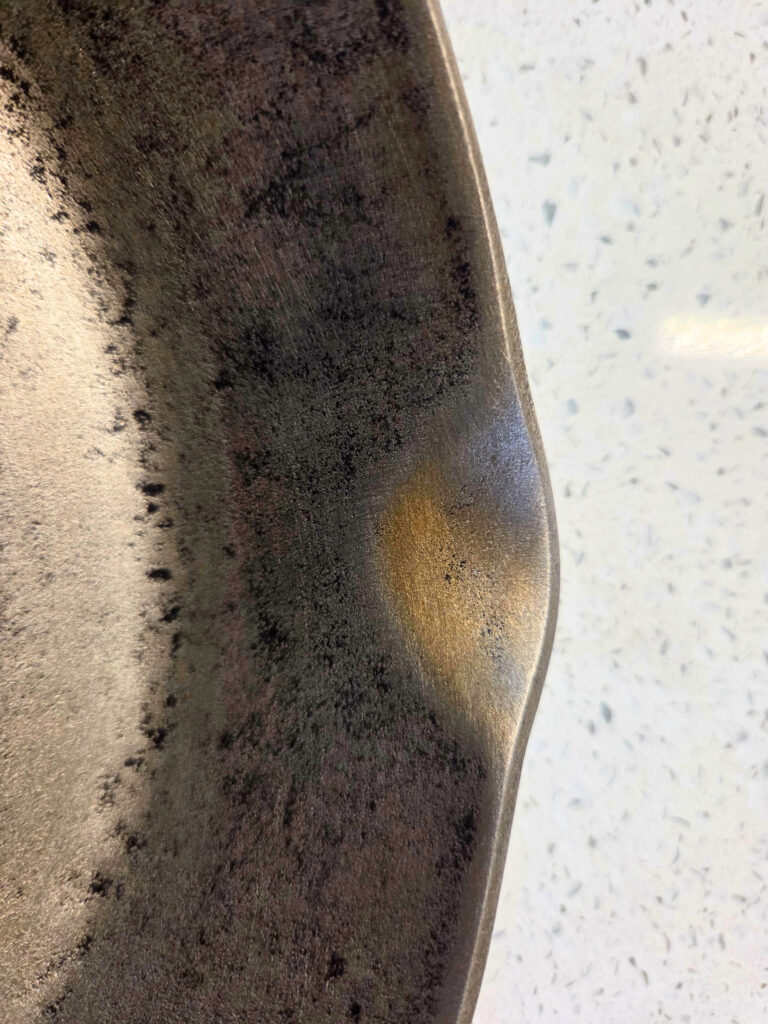
Cast iron rusts when exposed to the air and water. Rust is red or orange dots or patches on the cast iron pan.
To get your cast iron to stop rusting limit the amount of time it is wet. Dry off the pan instead of letting it drip dry. Heat the pan up to dry it after washing.
Once dry, coat your pan in a thin layer of oil after every use to create a barrier between your pan and the air.
If you notice your pan is rusting, then you need to remove the rust and re-season your pan to create a new layer of protection between the pan and the air.
Can I Restore a Rusty Cast Iron Pan?
Yes, I have restored many rusty cast iron pans. To remove the rust, you will use steel wool or sand down the rusty parts. Wash it well with soap and water. Dry the pan, then re-season it in the oven to make the pan as good as new!
What Oil is Best for Seasoning Cast Iron?
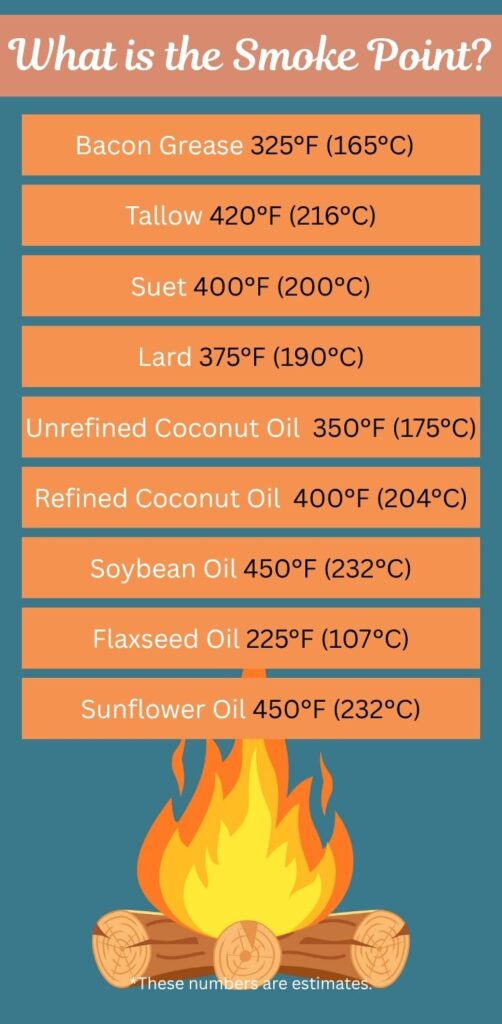
The oil that is best for seasoning cast iron is the one you keep on hand and feel confident using. For some people that is animal fats, for some it is coconut oil.
Flaxseed is high in omega 3 fatty acids and that helps create an extra strong layer of seasoning, but not everyone has flaxseed oil in their kitchen.
Why is my Cast Iron Sticky?
You cast iron is sticky because you have over oiled your seasoning.
If you over oil your pan, and place it face up in the oven to season. The pan will trap the extra oil and create a hardened, sticky pool of oil in the bottom of the pan.
Over oiling the pan can create large pools or small dots in the pan. The larger the oil pool is the stickier it will be.
In order to remove the sticky parts, you will need to remove the seasoning.

How do I Remove the Seasoning on my Cast Iron Pan?
There are three ways to remove the seasoning on a cast iron pan.
Put it through the oven on a self clean cycle or as high as your oven will go for an hour or more. The seasoning will be easy to remove in flakes.
Put your pan(s) in the heart of a fire and continue cooking or using it. When the coals have died down, you can remove the pan from the ashes. The seasoning should come off easily in flakes.
Sand off the seasoning in order to start over. I like to use 220 grit and 400 grit sand paper to remove the seasoning. This will take some time and energy, so I actually usually sand along with doing another method listed above.
Can I Re-Season a Cast Iron Pan
Yes! Re-seasoning a cast iron pan is as simple as seasoning it the first time.
When I resurface my pans, I have to re-season them from scratch. I have an entire post about how to season cast iron pans for beginners.

Is there Easy to Clean Cast Iron?
Yes! Cast iron can be easy to clean.
Enameled cast iron is as easy to clean as most non-stick pans on the market.
You can resurface (sand down) your non-enameled cast iron pans until they are flat. When you re-season them they will be much closer to non stick than they were originally.
Is Cooking on Cast Iron Healthy?
Many people say that cast iron pans are healthy because they don’t have any of the chemicals of typical non stick pans.
Teflon in particular is talked about constantly. Teflon is actually the brand name for the chemical polytetrafluoroethylene (PTFE). PTFE is used to make most non-stick cookware. Learn more about Teflon coating and safety by reading this article by WebMD.
Avoiding PTFE is a large reason people have been switching back to cast iron pans.

What is Enameled Cast Iron?
Enameled cast iron is a cast iron pan that has been coated with a layer of glass on the outside.
That layer of glass acts like a seasoning and makes it so your cast iron pan functions just like most other cookware. It can be washed with soap, soaked, doesn’t need seasoning, and is mostly non stick.
If you want to use cast iron, but don’t want to learn to do the upkeep of cast iron, enameled cast iron is the way to go!
What is Cast Iron Made Of?
Most cast iron pans are made of mostly iron and a small amount of steel. The iron holds heat and the steel helps prevent cracking and breaking in the pan overtime and heating.
When you look at the bottom of your cast iron pan it will have something stamped into the metal to tell you who made it. You can look up your pan and find out what your pan is made of.

Cast Iron vs Enameled Cast Iron
Deciding between cast iron or enameled cast iron is a big decision. The question is: how do you prefer to clean your pans?
Do you prefer to soak the pans and wash them as you would most other non stick pots and pans?
If you want your cast iron to be similar to all your other dishes get the enameled cast iron.
Do you prefer to wash them after each use, and don’t mind spending a few minutes wiping them down after each use?
If you don’t mind putting in a little extra work to keep the pans looking amazing, then get normal cast iron.
You can have both! I like having enameled pots that I can boil anything in without worrying about a seasoning. I have regular cast iron pans that I use for cooking everyday meals in too.
Should I buy the Expensive Cast Iron?
If you can afford cast iron pans that are more expensive and you want them, then I say get the ones you feel good about.
If an expensive cast iron pan is not in your budget right now, get a less expensive option.
Remember that these pans are supposed to last a life time and beyond, so take your time saving up for them, and choose the type of cast iron that fits into your life.
You can always thrift some cast iron pans now and upgrade later. Either way you have a reliable pan or pot for years and years to come!
Can I Use Cast Iron on a Glass Stove Top?
Yes, you just need to be careful. Cast iron is heavy and it will chip and scratch the surface.
Be mindful of your surface and use your cast iron frequently!
Can I Use Cast Iron over a Campfire?
Yes, we use our cast iron over the fire every time we go camping!
Your cast iron will get a lot of soot on the bottom side though, so wash the bottom off after every use.

Can I Use Metal Utensils on Cast Iron Pans?
Yes, you can use metal utensils on cast iron pans. The metal utensils will not damage the actual pan like metal does in non-stick pans.
If you are not careful you may scratch the seasoning a little during cooking, but that is easily fixed with another round of seasoning.
Can I Use Plastic Utensils on Cast Iron Pans?
No, don’t use plastic utensils on cast iron pans.
I used to use plastic on cast iron, but I realized that the heat from the cast iron was melting the edges of my spatulas into the food we were eating.
If plastic is what you have, then cook on low and watch to see if your plastic utensils melt.
Can I Recycle Cast Iron?
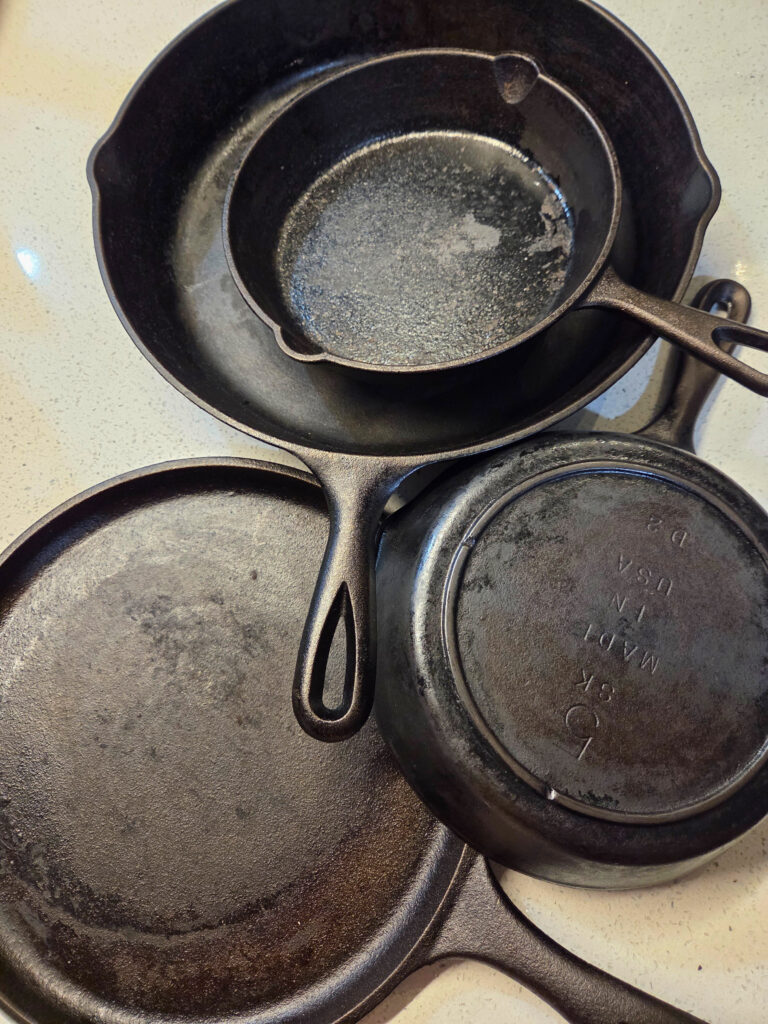
Yes! Please recycle your cast iron when you get rid of it. Cast iron is made of metals and metals are recyclable.
When do I Need to Stop Using my Cast Iron Pan?
A cast ion pan needs to be retired when it is cracked, warped, or so thin you cannot remove the rust anymore.
Once your pan has hit that level, then it needs to become decor, or be recycled.
Can I Fix my Uneven Cast Iron pan?
You can fix your uneven cast iron pan, if there will still be a good amount of cast iron left afterward.
If your pan is slightly uneven and sanding it down will not change the pan much then you can fix it.
If you need to remove so much of the pan that it will be thin after the process, then you need to retire the pan instead or use it as an uneven pan.
Can I Fix my Warped Cast Iron Pan?
No, unfortunately warped cast iron is best retired into decor or recycled.
What are Your Tips and Tricks to Care for Cast Iron Pans?
Let us know in the comments down below your tips and tricks to care for cast iron pans!
Other Articles You May Enjoy
How to Season a Cast Iron Pan for Beginners
How to Resurface a Cast Iron Pan
Homemade Cleaning Supplies You Can Make Right Now
Pin For Later

Leave a Reply