
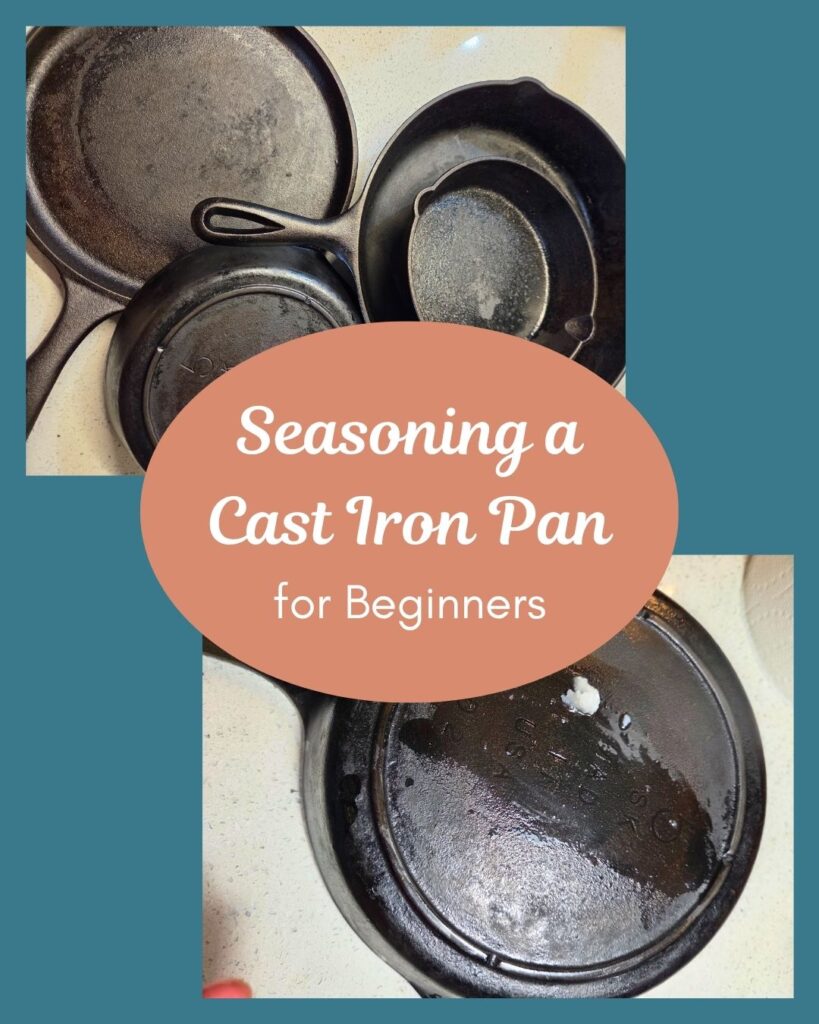
Congratulations on getting a cast iron pan! Maybe you thrifted it, were gifted it, or bought it. No matter how you obtained your pan you now need to season a cast iron pan.
Seasoning a cast iron pan sounds tricky and challenging, but once you learn the steps to season your pan it becomes routine. Soon you won’t imagine cooking without cast iron.
- Why Use Cast Iron?
- How are Cast Iron Pans Made?
- What is 'Seasoning' for a Cast Iron Pan?
- What Oil or Fat should I use to Season a Cast Iron Pan?
- Why does Cast Iron Need Seasoning?
- How do I Season a Cast Iron Pan?
- Why is My Cast Iron Pan Spotted?
- What do I do if my Cast Iron Pan Rusts?
- What Tips for Seasoning a Cast Iron Pan do you Have?
- Other Articles You May Enjoy
- Pin For Later
Why Use Cast Iron?
Cast iron pans don’t have any of the chemicals of typical non stick pans.
Teflon in particular is talked about constantly. Teflon is actually the brand name for the chemical polytetrafluoroethylene (PTFE). PTFE is used to make most non-stick cookware. Learn more about Teflon coating and safety by reading this article by WebMD.
Avoiding PTFE is a large reason people have been switching back to cast iron pans.
Cast iron can be resurfaced to fix any scratches or imperfections. Unlike other pans, cast iron can be resurfaced to create an ideal cooking surface more than once.
Cast iron pans can last a life time. When treated well cast iron can be a wonderful gift passed down throughout the family to future generations.
Cast iron pans get better with age and repeated use. Cast iron relies on oil to create a non slick surface. You begin by seasoning the pan, but then the food you cook in it and the quick reapplications of oil help create a natural non stick surface.
How are Cast Iron Pans Made?
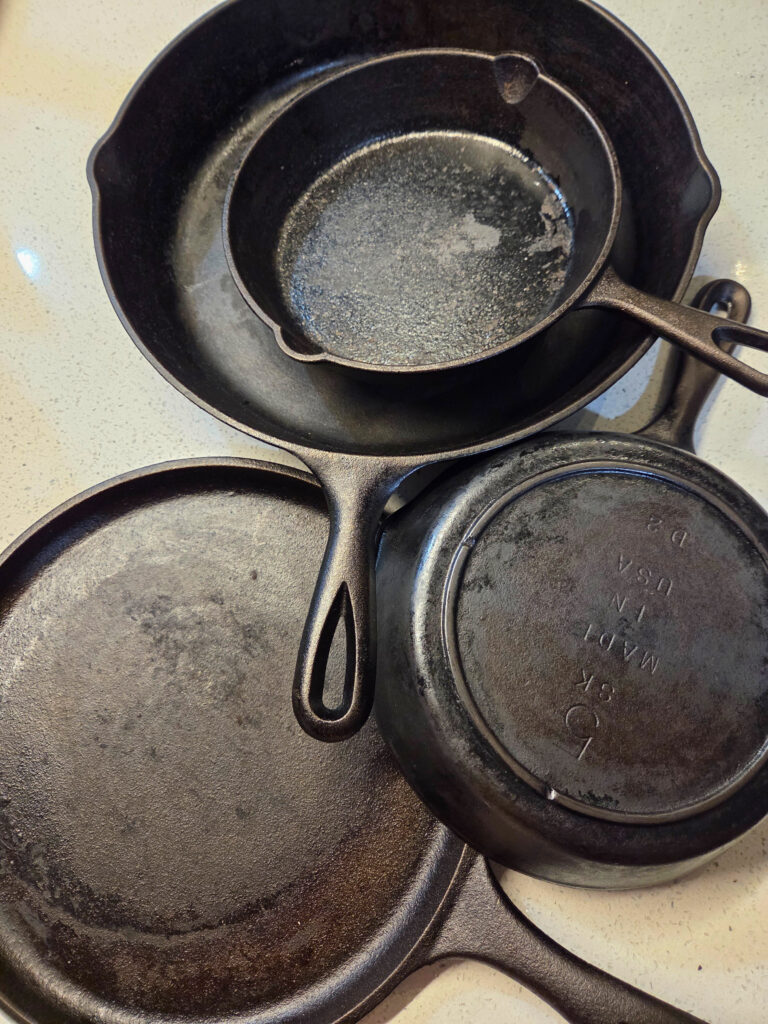
Cast iron pans are made by creating (casting) sand molds that the heated metal is poured into.
The sand explains why the pans are so bumpy at the bottom. It is the impression of the sand from casting that didn’t get sanded down afterward.
The pans are shaken out of the sand mold and then inspected for imperfections. Then they are cleaned and coated in grease as a primary seasoning.
Eater toured the Lodge factory and made a video all about how lodge creates its pans.
How it is made created this video, all about how enameled cast iron is created.
What is ‘Seasoning’ for a Cast Iron Pan?
The word ‘season’ when used when talking about cast iron is about creating an oil seal on the metal of the pan.
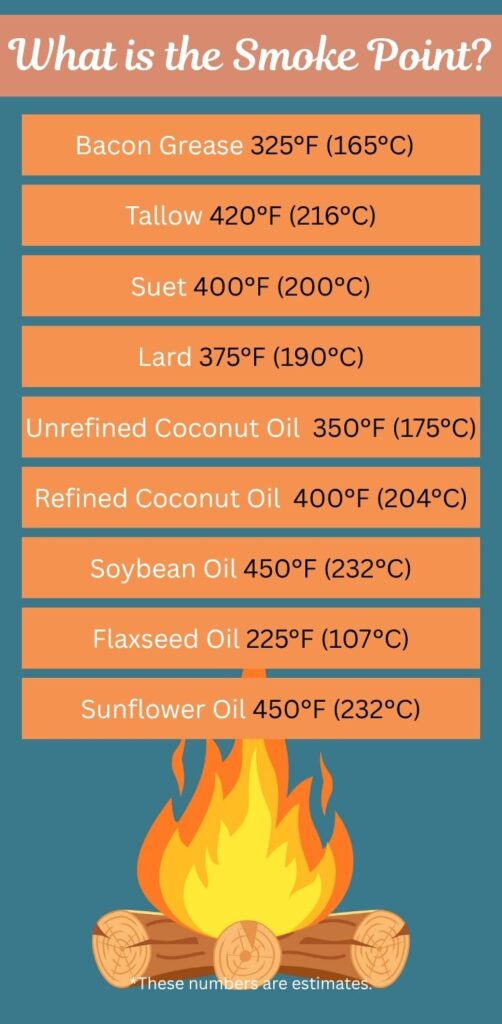
To season a pan you need to take the clean pan, cover it in a VERY light layer of your preferred oil or fat, then heat it to the oil’s smoke point.
Heating the oil to its smoke point makes the fat molecules break down and bond to the molecules of the pan and the other fat molecules around them. By bonding together the broken down (polymerized) molecules create a barrier between the pan and the food and air around it.
What Oil or Fat should I use to Season a Cast Iron Pan?
Choosing an oil to use to season your cast iron pan is a personal choice. Some people prefer animal fats, some avoid seed oils, but the bottom line is that you should choose a fat you keep in your pantry and that you like.
Seasoning Fat Options:
Bacon Grease, Tallow (beef), Suet (Beef or Lamb), Lard (pig)
Seasoning Oil Options:
Coconut Oil, Vegetable Oil, Flaxseed Oil, Canola Oil, Sunflower Oil, Olive Oil
Flaxseed oil is high in omega 3 fatty acids, which create an extra strong seasoning layer.
I have heard bee’s wax also works as a seasoning as well, but I haven’t tried it. If you are interested in learning more about bee’s wax, then read this article by Keeping Backyard Bees.
Why does Cast Iron Need Seasoning?
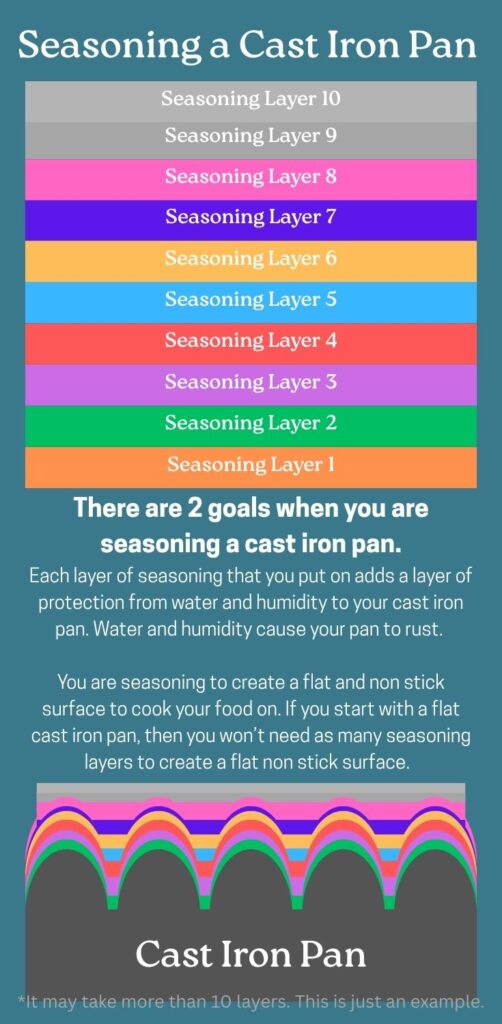
Seasoning is important for cast iron for a few reasons. Seasoning protects your cast iron pan from water and creates a non stick surface for cooking.
.Cast iron pans rust from exposure to water and from the humidity in the air. By seasoning your cast iron pans you are creating a water proof barrier between your pan and the world.
Seasoning your cast iron pan creates a non stick surface for cooking.
How do I Season a Cast Iron Pan?
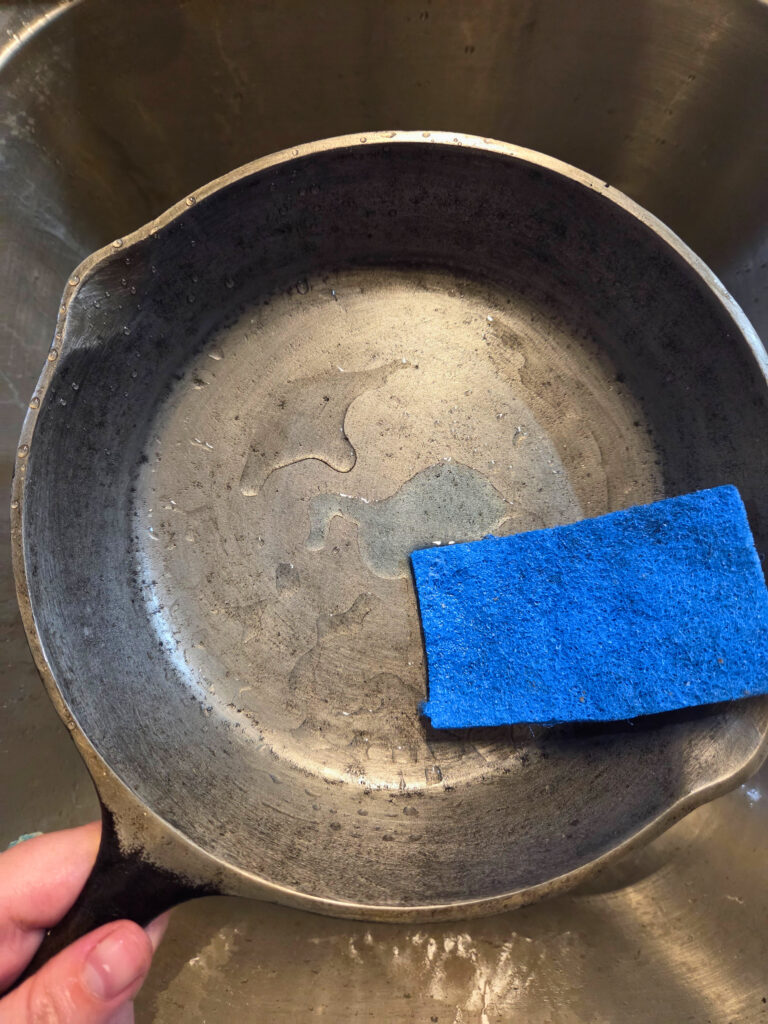
Step 1 – Clean your Cast Iron Pan Well
Wash it with soap and water to get off any food or dust that may be on your pan.
Step 2 – Dry Your Pan
You want your pan bone dry. I like to heat it on the stove to make sure that there are not any pockets of water left.
Step 3 – Add a Small Amount of Oil and Coat the Pan
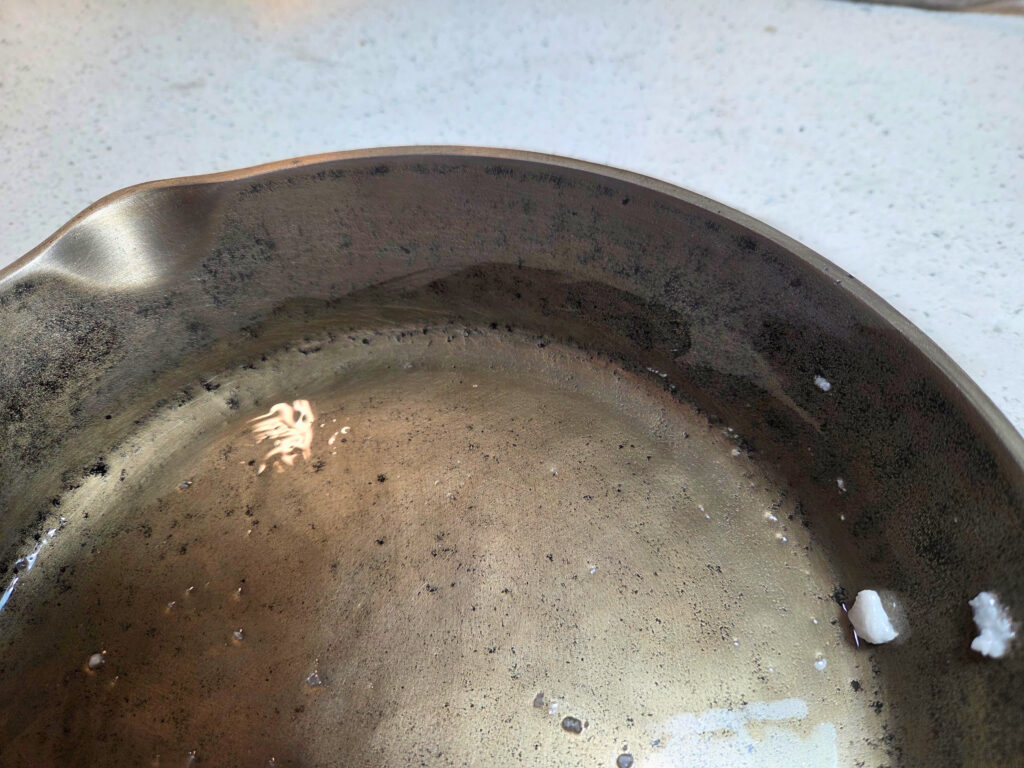
Add a teaspoon or two of oil to your clean, dry pan and spread the oil around to coat the pan.
You can tell that everything is coated when it all has a shine to it.
Step 4 – Use a Clean Towel to Wipe out the Oil
You want to wipe off all the oil you just added to the pan. You want to get it all out because extra oil in your pan will drip into your oven or will create an uneven seasoning layer.
Step 5 – Bake the Pan Upside Down
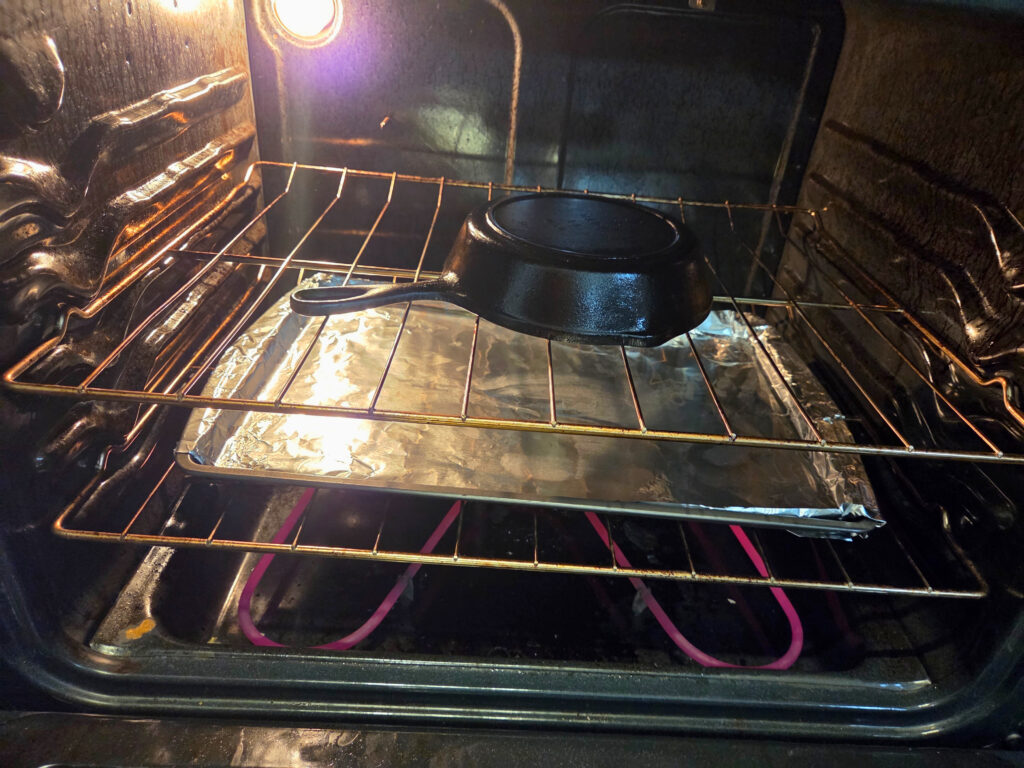
Place your pan upside down in the oven. You can add a sheet of aluminum foil underneath it if you want to protect your oven bottom.
I don’t recommend you use a pan because your pan may not handle the heat well.
Bake your pan 25-50°F or 4-8°C higher than the smoke point of the oil you are using.
Why is My Cast Iron Pan Spotted?
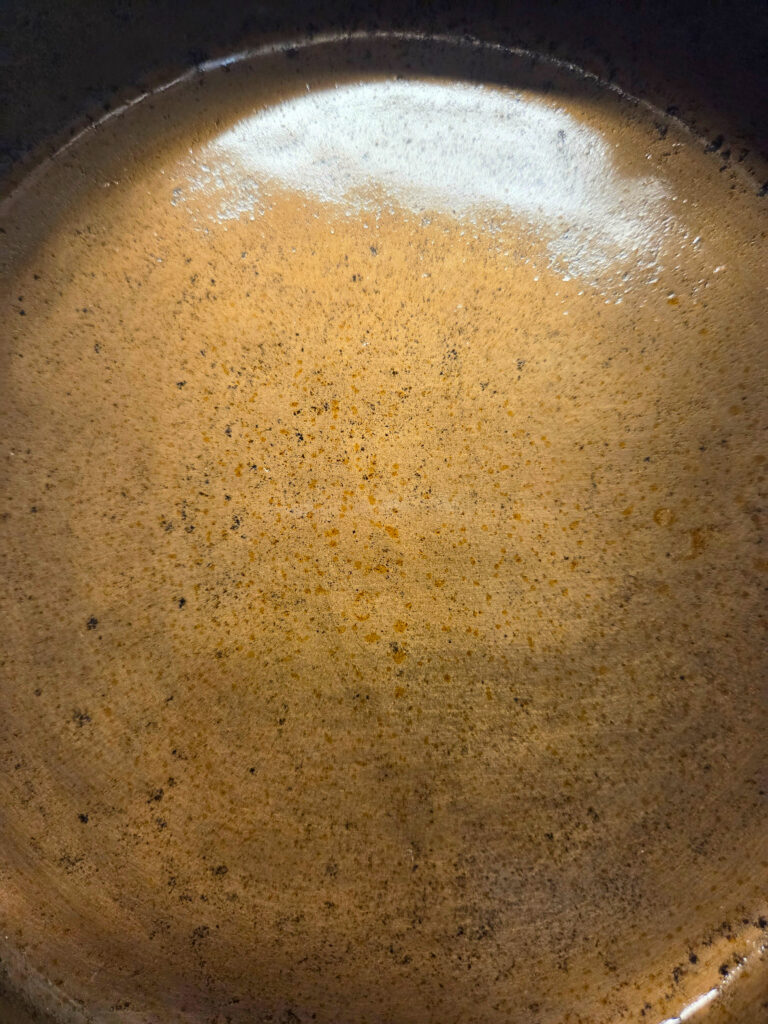
As I was seasoning this pan after I stripped it I noticed these brown spots. The brown spots were new and had not been there before I seasoned it.
I looked into it and discovered that these brown spots are pooled oil. This was the sign that I had too much oil on my pan when I put it in for seasoning.
If your pan is dotted like mine, then you have two options.
You can sand off the spots and start the seasoning process over or you can continue to season and trust that the pan will still clean up well.
The first time I found these spots I sanded off the spots and started over. Then the spots appeared smaller as I seasoned the pan again.
I decided to try to let them be the second time and I haven’t had a problem with them at all!
What do I do if my Cast Iron Pan Rusts?
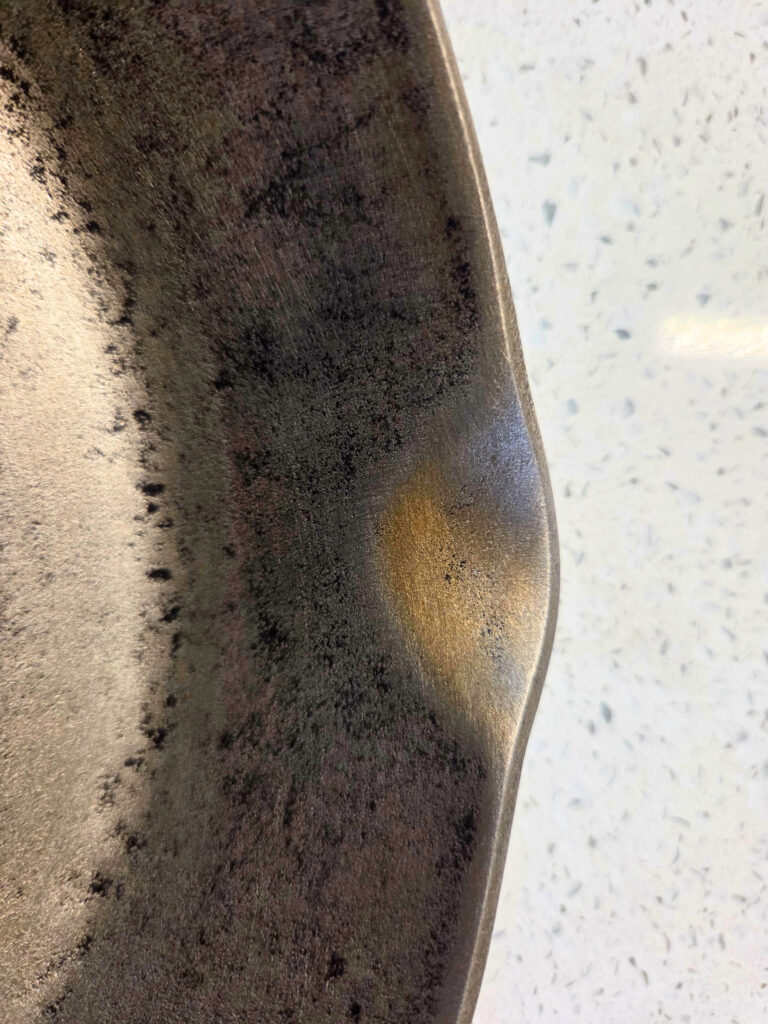
If you find that your pan is rusting you have a few options to bring the pan back to life.
Rust looks red or orange depending on how long it has been on the pan. In the picture above, the rust had been there less than a day and you can see its orange color.
Use salt to remove the rust. Pour some salt and oil in the pan and scrub the rust off. The salt is a gentle abrasive and will get the rust off and the oil will prevent oxygen from getting to the exposed iron. Throw away the salt after you finish removing the rust.
Use sand paper to remove the rust. Use a 220 or 400 grit sand paper with some oil to remove the rust spots.
Wash the pan with soap and water. While normally you may not want to use soap, this is a situation I would use soap. You don’t want anything underneath the seasoning.
Wipe dry or heat to dry. You never what to let cast iron drip dry. Remember cast iron oxidizes when wet to leaving it wet for long enough to drip dry may cause it to rust.
Season the pan again to protect it. Follow the directions to season the pan again.
Why does Cast Iron Rust so Quickly?
Cast Iron rusts quickly, because iron reacts to water and air. When iron comes into contact with air it oxides which is what causes the rust you see.
What Tips for Seasoning a Cast Iron Pan do you Have?
Let us know in the comments down below what tips do you have for seasoning cast iron pans!
Other Articles You May Enjoy
How to Resurface a Cast Iron Pan
Fresh Milled Flour Basics You Need to Know
How to Label Food so it’s Never Forgotten Again!
Pin For Later
Seasoned pans work the best!!
Yes, they do! Thank you for commenting.
This guide simplifies seasoning cast iron pans really well for beginners. I appreciate the step-by-step tips, especially about using flaxseed oil for a durable coating.
I am so glad you think this article is helpful! Knowing how to take care of your pans makes it easier to use them.
Thank you for commenting!