
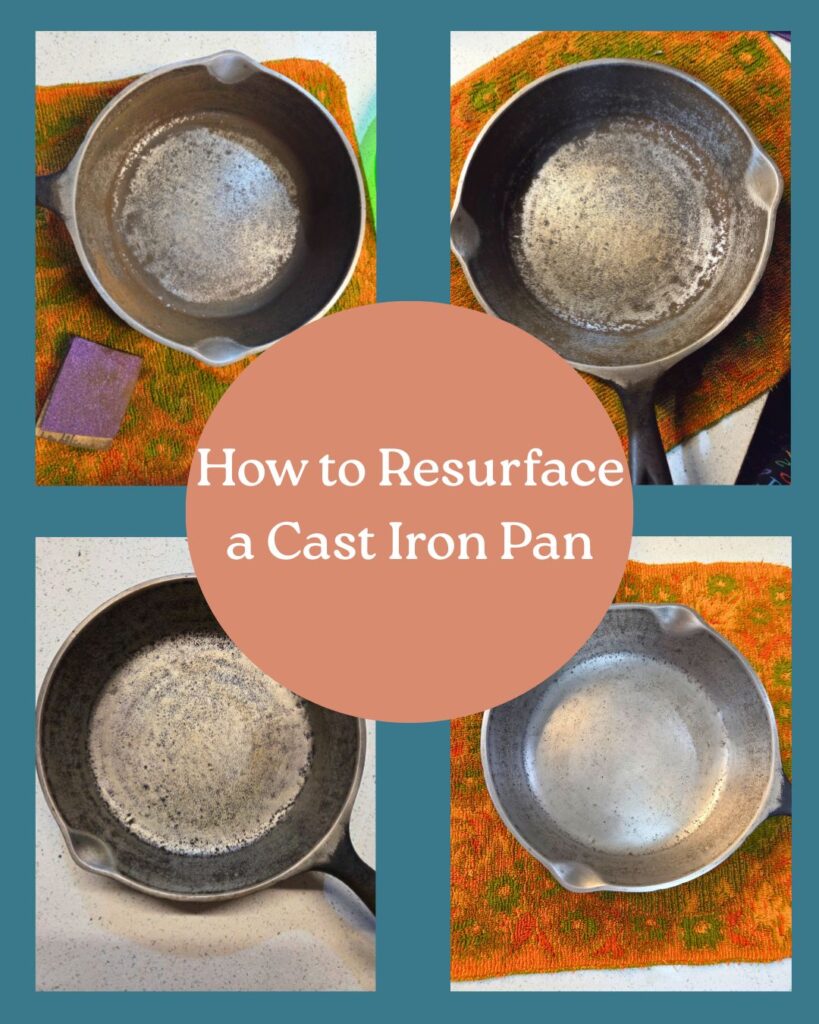
There is a revolution to go back to using cast iron pans to avoid non-stick pans right now. Are you interested in using cast iron pans? Is your cast iron pan hard to clean? Is the food sticking to your pan? Maybe you need to resurface your cast iron pan down too!
- Why Use Cast Iron?
- How are Cast Iron Pans Made?
- Where Can I Get Cast Iron Pans?
- Why Resurface your Cast Iron?
- Can I Resurface a Cast Iron Pan by Hand?
- How Long will it Take to Resurface a Cast Iron Pan by Hand?
- Can I Resurface with an Electric Hand Drill?
- What is the Fastest Way to Resurface a Cast Iron Pan?
- How to Resurface a Cast Iron Pan
- Will my Cast Iron Pan Stay Silver?
- What do I do If my Cast Iron Pan Rusts while Resurfacing?
- Would you Resurface a Cast Iron Pan?
- Other Articles You May Enjoy
- Pin For Later
Why Use Cast Iron?
Cast iron pans don’t have any of the chemicals of typical non stick pans.
Teflon in particular is talked about constantly. Teflon is actually the brand name for the chemical polytetrafluoroethylene (PTFE). PTFE is used to make most non-stick cookware. Learn more about Teflon coating and safety by reading this article by WebMD.
Avoiding PTFE is a large reason people have been switching back to cast iron pans.
Cast iron can be resurfaced to fix any scratches or imperfections. Unlike other pans, cast iron can be resurfaced to create an ideal cooking surface more than once.
Cast iron pans can last a life time. When treated well cast iron can be a wonderful gift passed down throughout the family to future generations.
Cast iron pans get better with age and repeated use. Cast iron relies on oil to create a non slick surface. You begin by seasoning the pan, but then the food you cook in it and the quick reapplications of oil help create a natural non stick surface.
How are Cast Iron Pans Made?
Cast iron pans are made by creating (casting) sand molds that the heated metal is poured into.
The sand explains why the pans are so bumpy at the bottom. It is the impression of the sand from casting that didn’t get sanded down afterward.
The pans are shaken out of the sand mold and then inspected for imperfections. Then they are cleaned and coated in grease as a primary seasoning.
Eater toured the Lodge factory and made a video all about how lodge creates its pans.
How it is made created this video, all about how enameled cast iron is created.
Where Can I Get Cast Iron Pans?
Buy New – I have some beautiful enameled cast iron pans by Made In that my husband gifted to me. We use them all the time and love them!
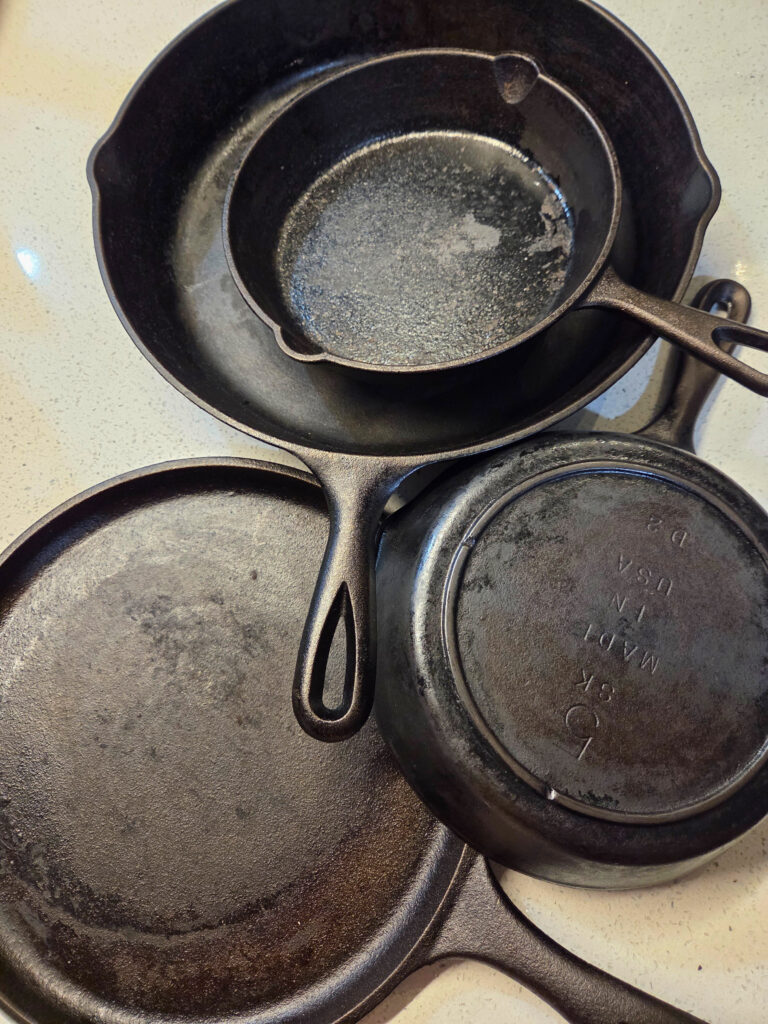
Thrift for Pans – I wanted more pans than just enameled ones, so I watched thrift shops in my area and I was able to acquire a few traditional cast iron pans from them too.
I got each pan for $10-$20. There were other pots too, but my thrift store was selling them for more than I was willing to pay.
I have never seen enameled cast iron in the thrift shop only traditional cast iron, so thrifting may not be your best bet for enameled cast iron.
Ask Your Friends and Family – After I started collecting cast iron pots and pans my mother in law offered me the pans that her parents had used too. Ask around, people might be happy to give you what they are not using!

Why Resurface your Cast Iron?
I had never heard of resurfacing your cast iron pans until I was watching this video by Ruth Zimmerman for cast iron pan tips and tricks.
Ruth talks about how her mothers cast iron pan is smooth as glass, but the new cast iron pan they bought is rough. She has her husband sand the pan smooth and it makes a big difference in the non stick aspects of the pan.
Once I saw that video I decided I wanted to try sanding my cast iron pans too! I want to make my cast iron simple to clean and use. Having pans that work well help me feel confident cooking for my family.
Can I Resurface a Cast Iron Pan by Hand?
Yes! Sanding a cast iron pan by hand is not for the faint of heart. I don’t own an angle grinder, so I wanted to try to resurface my pans by hand.
I went to home depot and got sand paper and was excited the start sanding my first pan. It was more work and time than I had originally thought it was going to take.
How Long will it Take to Resurface a Cast Iron Pan by Hand?
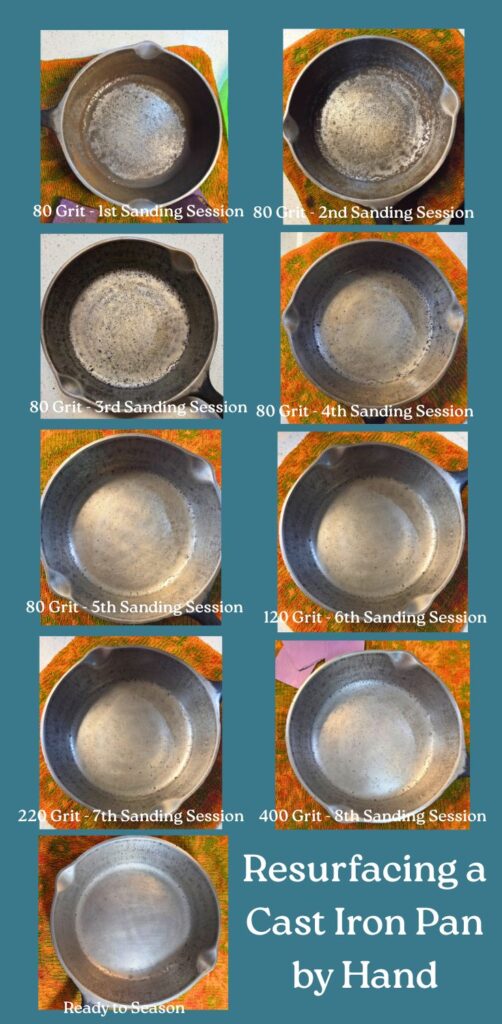
Plan to spend a week on each pan. Getting the surface smooth is going to take 8-12 hours of sanding. Remember you are using sand paper to sand down metal.
Sanding by hand is a labor of love to your future self. You are sending a lot of time creating the perfect pan
Resurfacing pans by hand doesn’t cost a lot of money, but it does cost a lot of time.
My fingers got tired so I had to take longer breaks between sanding sessions. It isn’t something you can do all in one day.
I recommend planning to do two or three 30 minute sanding sessions per day, with long breaks in between. That felt doable with my schedule and my fingers weren’t sore at the end of the sessions.
Can I Resurface with an Electric Hand Drill?
Yes, there are sanding extensions for an electric hand drill that will work for resurfacing a cast iron pan.
After the first pan, I decided to purchase these hand drill sanding pads. I got this extra pack of sand paper tops as well.
You will still need the same sand paper grit types that are listed below to resurface a cast iron pan.
Remember to use safety precautions when using machinery.
What is the Fastest Way to Resurface a Cast Iron Pan?
The fastest way to resurface a cast iron pan is using an angle grinder.
Angle Grinders can be found at most local hardware stores. Many quality angle grinders are priced between $100 and $200.
You will still need the same sand paper grit types that are listed below to resurface a cast iron pan.
Remember to use safety precautions when using machinery.

How to Resurface a Cast Iron Pan
Purchase your Sand Paper and Gather your Tools
You will need 3-4 different grits of sand paper.
Grit means how many abrasive particles there are per square inch of the sand paper.
80 Grit – 80 grit paper has fewer abrasive particles, but they are large. This is the sandpaper you will use the most. 80 grit is what you use to remove the bumps on your pan.
120 Grit – 120 grit paper has a few more abrasive particles than 80. This sand paper is to smooth out the scratches that the 80 grit paper left in your pan.
220 Grit – 220 grit has a good amount of abrasive particles, but they are very small. This paper is for smoothing out the scratches from 120 grit.
400 Grit – 400 grit has many abrasive particles and they are tiny. This is the finishing paper. You are smoothing and perfecting your pan.
If you have to choose 3 grits to get, get 80, 120, and 220 grit.
Optional Gloves – You may want some tough gloves to help protect your hands from the sand paper.
Paper Towels – The pan will stain any towel black that you use, so this is a good time to use paper towels.
Oil for Rust Protection – You can use any oil you prefer for seasoning your pan. You will be oiling between each sanding session.
Directions
Step 1 – Start Sanding
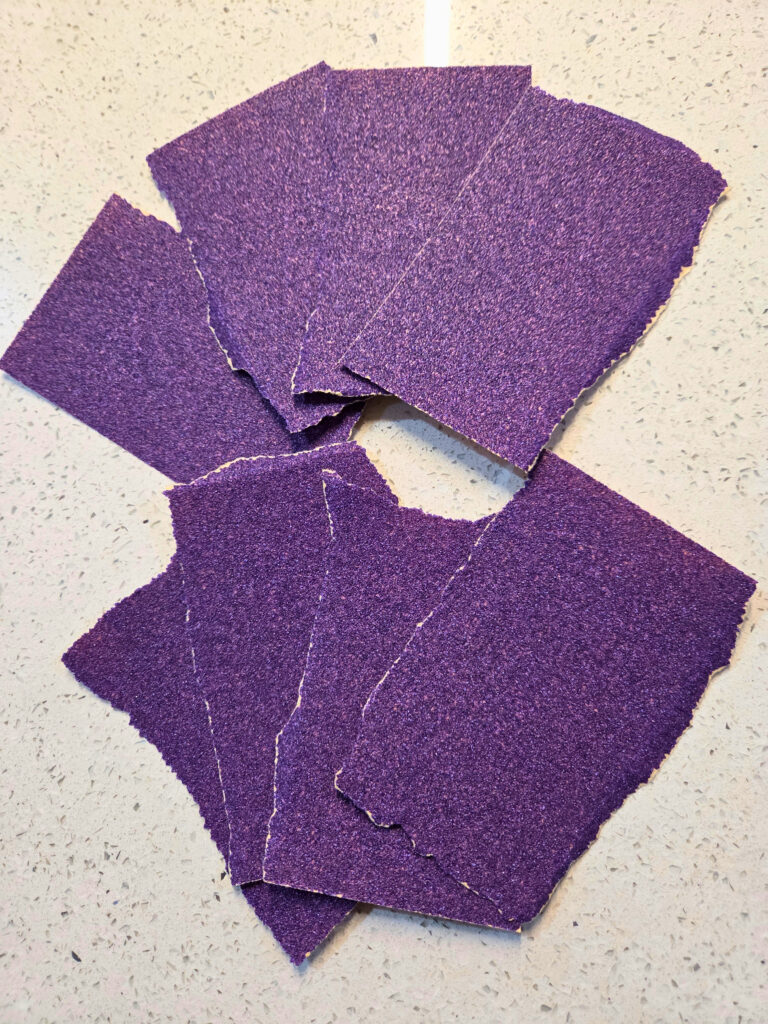
Start with the 80 grit sand paper. If you are sanding by hand then fold and rip it into 8 pieces. These smaller sections are easier to use than the whole paper.
Begin sanding the surface of the pan. Your goal is to get rid of all the black on the inside cooking part of the pan. I started with the rim and the pouring spouts because I wanted to be able to see some quick progress.
As you sand, you will notice just how many crevices and bumps the pan has. You want to level most of it out for a perfect or nearly perfect pan.
Step 2 – Keep Sanding
Use the 80 grit paper until all the black parts are gone. This part takes the longest and is the most intensive part. Removing the seasoning and the bumpy texture is the hardest part.
I like to working in 30 minute intervals multiple times a day.
Step 2 – Wash, Dry and Oil the Pan
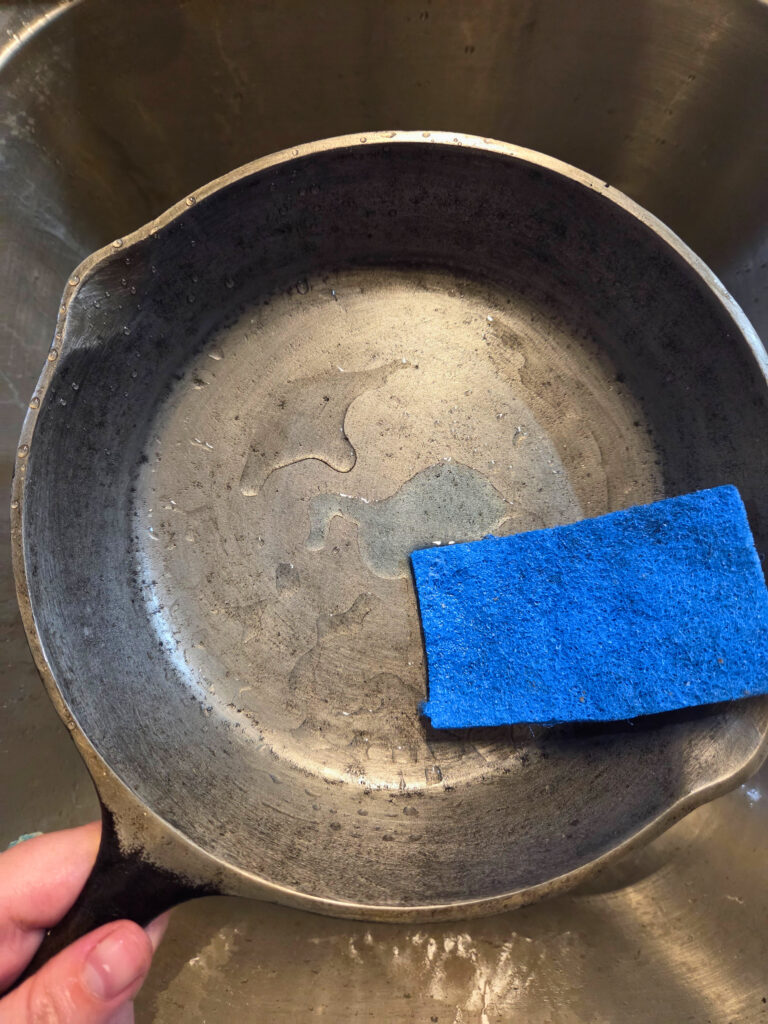
Wash the pan with soap and water. You want to remove all the debris and sand paper particulates from your pan before beginning with a new grit.
I wash the pan between each sanding session to so that I can get a good look at my progress.
Dry the pan well and then apply a light layer of oil to it. You need to remove all the water to prevent rust and the layer of oil prevents rust too. I recommend avocado oil, grapeseed oil, or vegetable oil.
APPLY OIL ANYTIME YOU LEAVE YOUR PAN FOR MORE THAN AN HOUR. You would hate to do all this sanding and come back to a rusty pan that you have to sand more.
Step 3 – Repeat Sanding, Washing, Drying, and Oiling
Repeat the sanding, washing, drying and oiling steps until you are happy with how flat your pan is. This took me 3-4 days of work with the 80 grit by hand.
Step 4 – Switch to 120 Grit Sandpaper
Use the 120 grit paper to remove the scratches made by the 80 grit paper. This process is much faster than the 80 grit process!
Switch to 120 grit when the black spots are gone or mostly gone.
Step 5 – Repeat Washing, Drying, and Oiling
Read Step 2 if you need more directions.
Step 6 – Switch to 220 Grit Sandpaper
Use the 220 grit paper to remove the scratches made by the 120 grit paper.
Switch to 220 grit when the scratches from the 80 grit are mostly gone. If you think it is time to switch, then switch! You can always go back to the previous grit if you need to.
Step 7 – Repeat Washing, Drying, and Oiling
Read Step 2 if you need more directions.

Step 8 – Switch to 400 Grit Sandpaper
Use the 400 grit paper to remove the scratches made by the 220 grit paper.
Switch to 400 grit when the scratches from the 120 grit are mostly gone. If you think it is time to switch, then switch! You can always go back to the previous grit if you need to.
Step 9 – Wash, Dry, and Prepare to Season
Wash the pan with soap and water. You want to remove all the debris and sand paper particulates from your pan before you season your pan. Wash it as well as you can. Whatever is left on the pan is going to be in the seasoning.
Dry the pan well and then apply a light layer of oil to it for seasoning. Use the oil you want to season your pan with for this layer of oil.
Step 10 – Season Your Pan and Enjoy!
Begin the process to season your pan and enjoy cooking because you worked hard to resurface a cast iron pan!

Will my Cast Iron Pan Stay Silver?
No, your pan will turn black with use. The black layer on your pan is the seasoning. So as soon as you start seasoning and using your pan again it will turn black again. After one seasoning, my pan had already started to look brown.
What do I do If my Cast Iron Pan Rusts while Resurfacing?
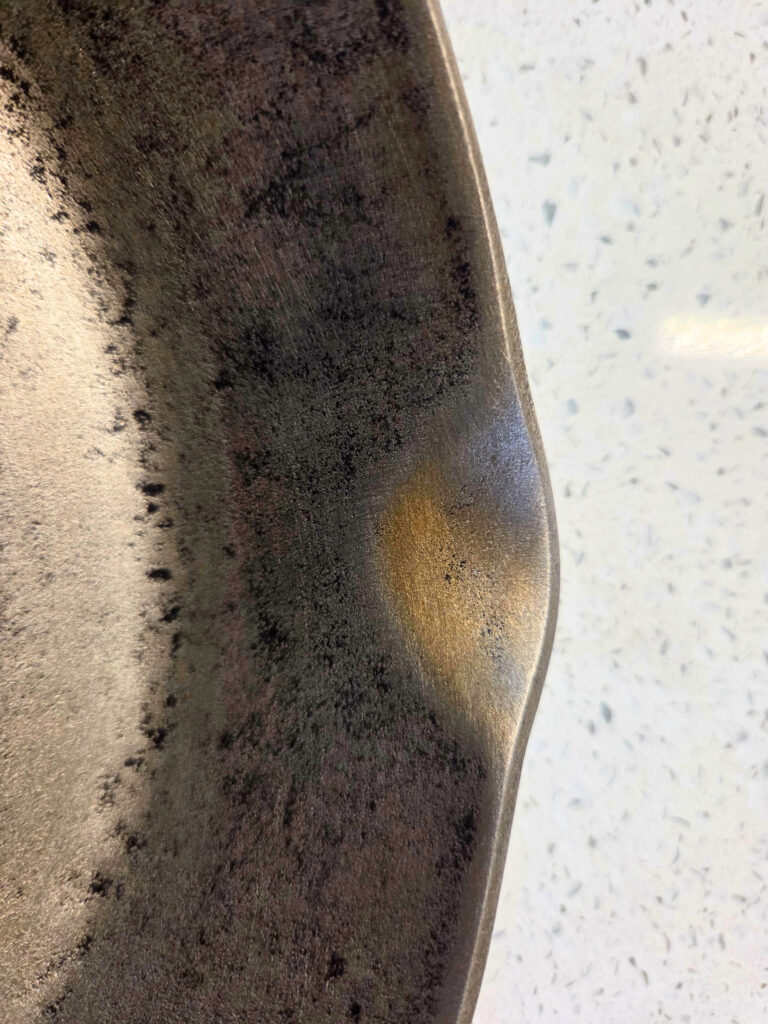
If you don’t oil your pan enough between sanding sessions you will have some rust. Rust looks brown or orange on your pan instead of silver or black.
When you find rust on your pan you should sand the rusty part of the pan back down to the silver. It won’t take long to get it back to the shiny silver again!
Would you Resurface a Cast Iron Pan?
Let us know in the comments down below if you have, will or would resurface your cast iron pan!
Other Articles You May Enjoy
How to Organize Your Pantry for Good
Homemade Cleaning Supplies You Can Make Right Now
How to Begin Decluttering Your Home Quickly
Pin For Later
Leave a Reply